Loading...
khartoum
Omdurman Mulazimin
أم درمان الملازمين
Typical rent
$150–300/mo for a 3BR traditional house
Power
Limited
Water
Variable
Diaspora
Not typical
30 km from nearest airport
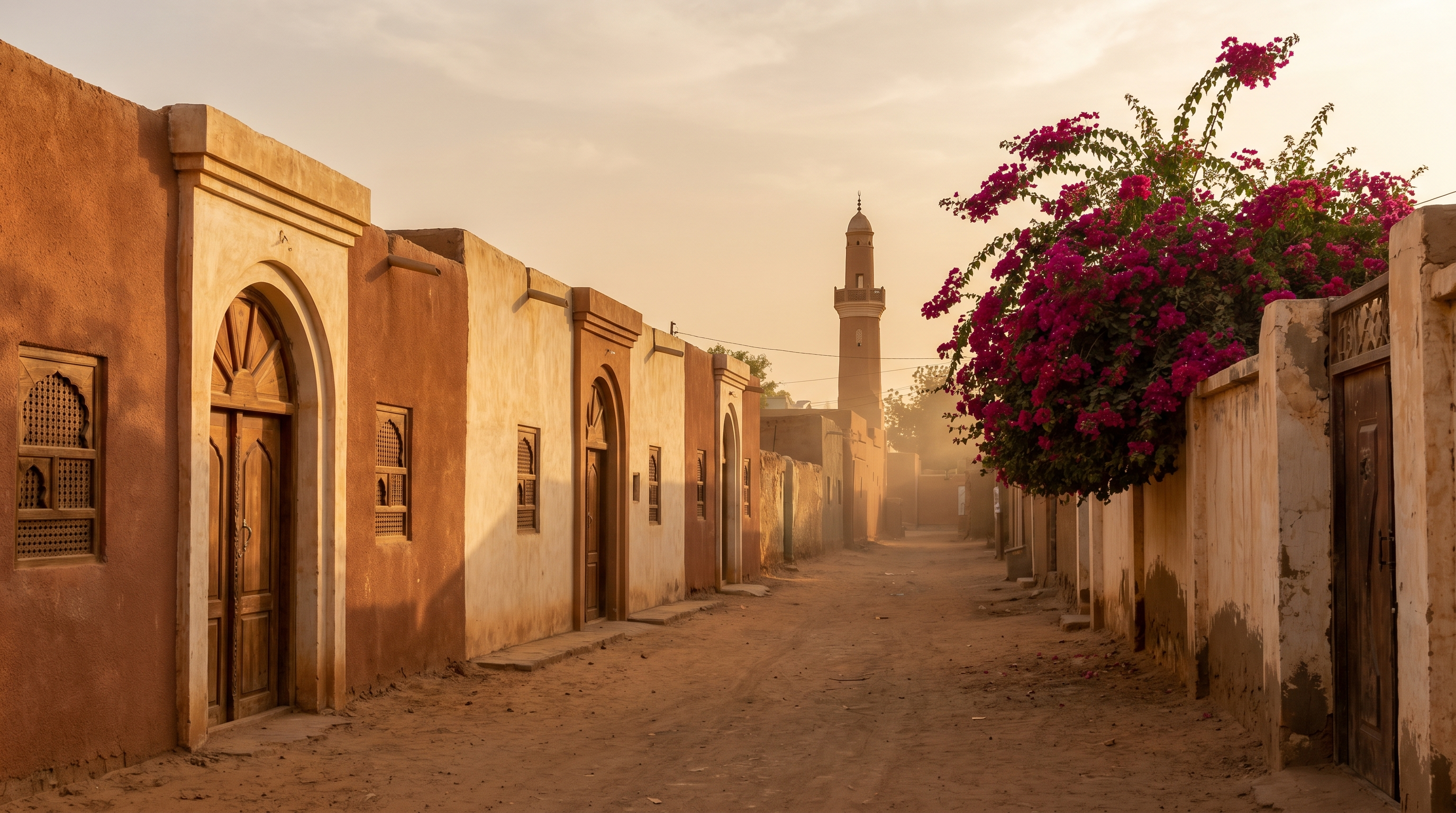
Mulazimin is the oldest residential quarter of Omdurman, which is itself the oldest continuous urban settlement on the confluence. The neighbourhood grew around the barracks of the Mahdist army — 'mulazimin' meaning 'attached troops' — and the architecture still carries echoes of that layered history: broad-walled houses with interior courtyards, rooms added generation by generation, trees that have been growing for a hundred years. It is not a neighbourhood designed for outsiders, but for those who come to live rather than to visit, the texture of community life here is unlike anything in central Khartoum.
Who lives here
Mulazimin is multigenerational in a way that is increasingly rare in Sudanese cities: grandparents, parents, and grandchildren under one extended roof is still normal here, not exceptional. The community is predominantly northern Sudanese with family roots running deep into the Nile Valley — Jaalyeen, Shaigiyya, Danagla families who have held these streets since the late nineteenth century. There are no expats, few NGO workers, and almost no short-term renters. For diaspora families with roots in Omdurman, returning to Mulazimin often feels like the only honest choice.
What it's like day-to-day
Power in Mulazimin is variable and cuts are long — eight to fourteen hours without power is possible on bad days. Generator culture is strong but less universal than in Khartoum 2; many households manage with rechargeable lights and patience. Water pressure is better than Omdurman's reputation: the main supply line serving this part of the city was upgraded in 2019 and has been reasonably reliable since. The Omdurman central souq is a fifteen-minute walk — one of the great market experiences in Sudan. The tomb of the Mahdi and the Khalifa's House museum are ten minutes away; on a quiet Tuesday morning, walking this stretch is a lesson in the texture of Sudanese history.
What to know before renting
The rental market in Mulazimin is almost entirely informal — most transactions happen through community introductions, not agents or platforms. If you arrive without a local contact, finding a quality rental is genuinely difficult. Pricing is still denominated in SDG, not USD, which means exchange-rate risk for diaspora renters sending money from abroad. Leases, where they exist, are typically annual verbal agreements witnessed by a community elder. The neighbourhood has minimal commercial infrastructure compared to central Khartoum — there are no Western pharmacies, no delivery services, and limited connectivity. For many residents, that is precisely the point.
Browse listings in Omdurman Mulazimin
See the apartments, houses, and villas available right now in this area
Listings in Omdurman Mulazimin