Loading...
khartoum
Khartoum Amarat
الخرطوم العمارات
Typical rent
$320–700/mo for a 2BR apartment
Power
Good
Water
Variable
Diaspora
Favoured
16 km from nearest airport
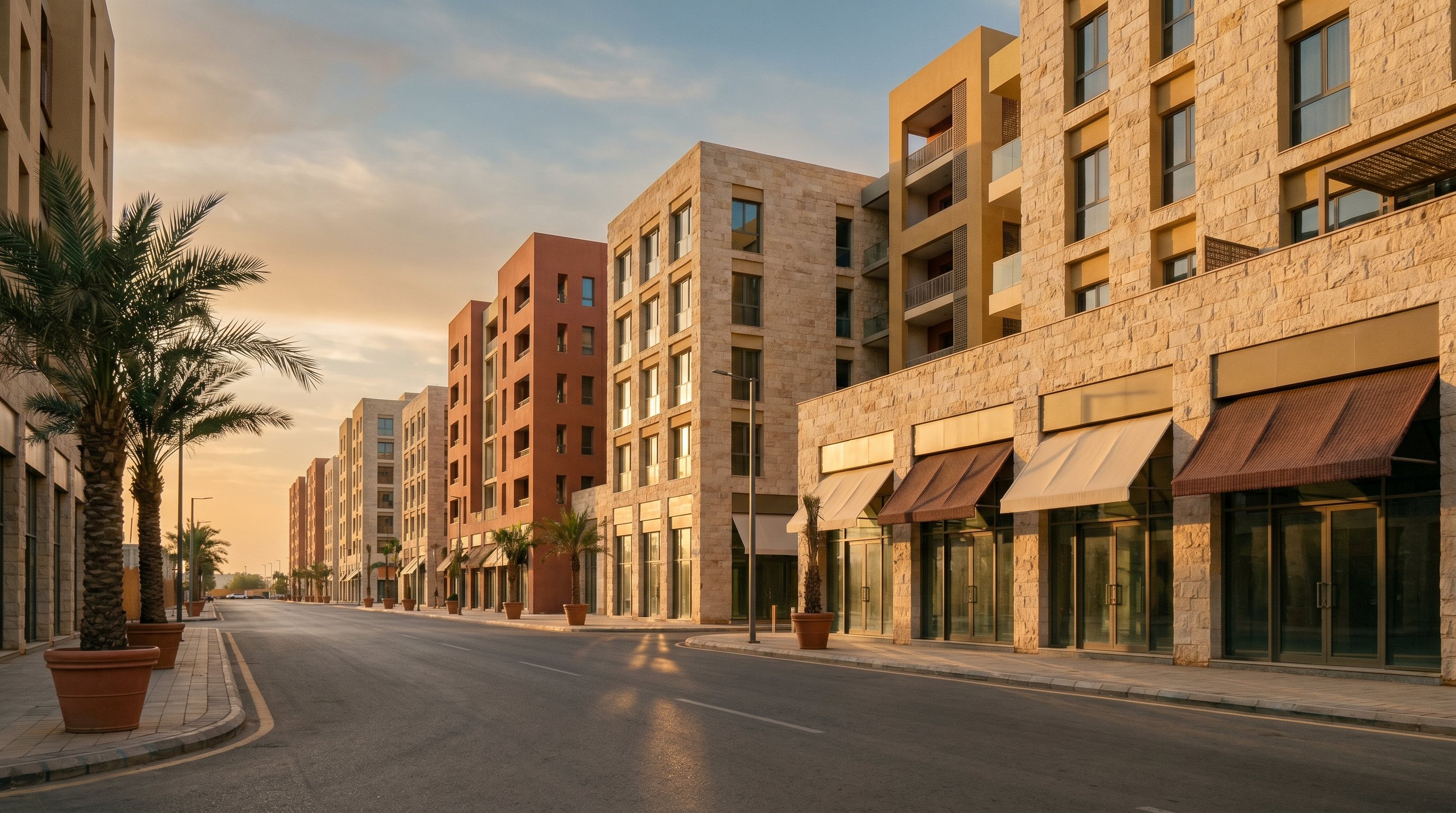
Amarat is the commercial-residential seam of Khartoum — the neighbourhood where a ground-floor insurance office sits beneath three floors of apartments, where the line between office and home has always been blurry. Stretching along Africa Road and its tributaries, it houses a concentration of businesses, law firms, travel agencies, and mid-size restaurants that make it the most economically active residential zone in the city. Living here means accepting noise and traffic as ambient conditions, in exchange for being walking distance from almost every service you need.
Who lives here
Amarat's apartment stock is the city's widest — studios through four-bedrooms, old walk-up blocks, newer buildings with lifts and parking. The population is correspondingly diverse: single professionals, young families, business owners who live above their office, and an above-average concentration of Sudanese diaspora who want convenience over prestige. The neighbourhood has historically been home to a Lebanese and Egyptian commercial community, leaving behind restaurants and bakeries that are still operating under the same family names.
What it's like day-to-day
Power in Amarat is somewhat better than the city average — the commercial concentration means the grid prioritises this corridor. Expect six to ten hour cuts rather than twelve. Water is generally adequate in upper-floor apartments when roof tanks are maintained, but ground and first-floor units in older buildings can have pressure issues. The neighbourhood has excellent food options at all price points: a fresh juice stand on most corners, several decent Sudanese lunch restaurants, a Lebanese bakery near Africa Road that opens at 06:00. Traffic between 07:30 and 09:00 and again at 16:00–18:30 is genuinely congested; if you work nearby, consider the timing.
What to know before renting
Amarat has a more professionalised rental market than most Khartoum neighbourhoods — more listings appear on platforms, more landlords use written contracts, and there is a well-established agent network. Pricing is a mix of USD and SDG; the higher-quality buildings typically price in USD. Noise is the underreported issue: if you are sensitive to street noise, inspect the unit on a weekday afternoon rather than a Friday when the streets are quiet. Generator fuel costs, if the building uses one, are typically passed to tenants as a monthly levy and can add $30–60 to the effective rent.
Browse listings in Khartoum Amarat
See the apartments, houses, and villas available right now in this area
Listings in Khartoum Amarat